
Alexander Reinagle: Composing a New Nation
Stephen Siek, piano and fortepiano
Stephen Siek, piano and fortepiano
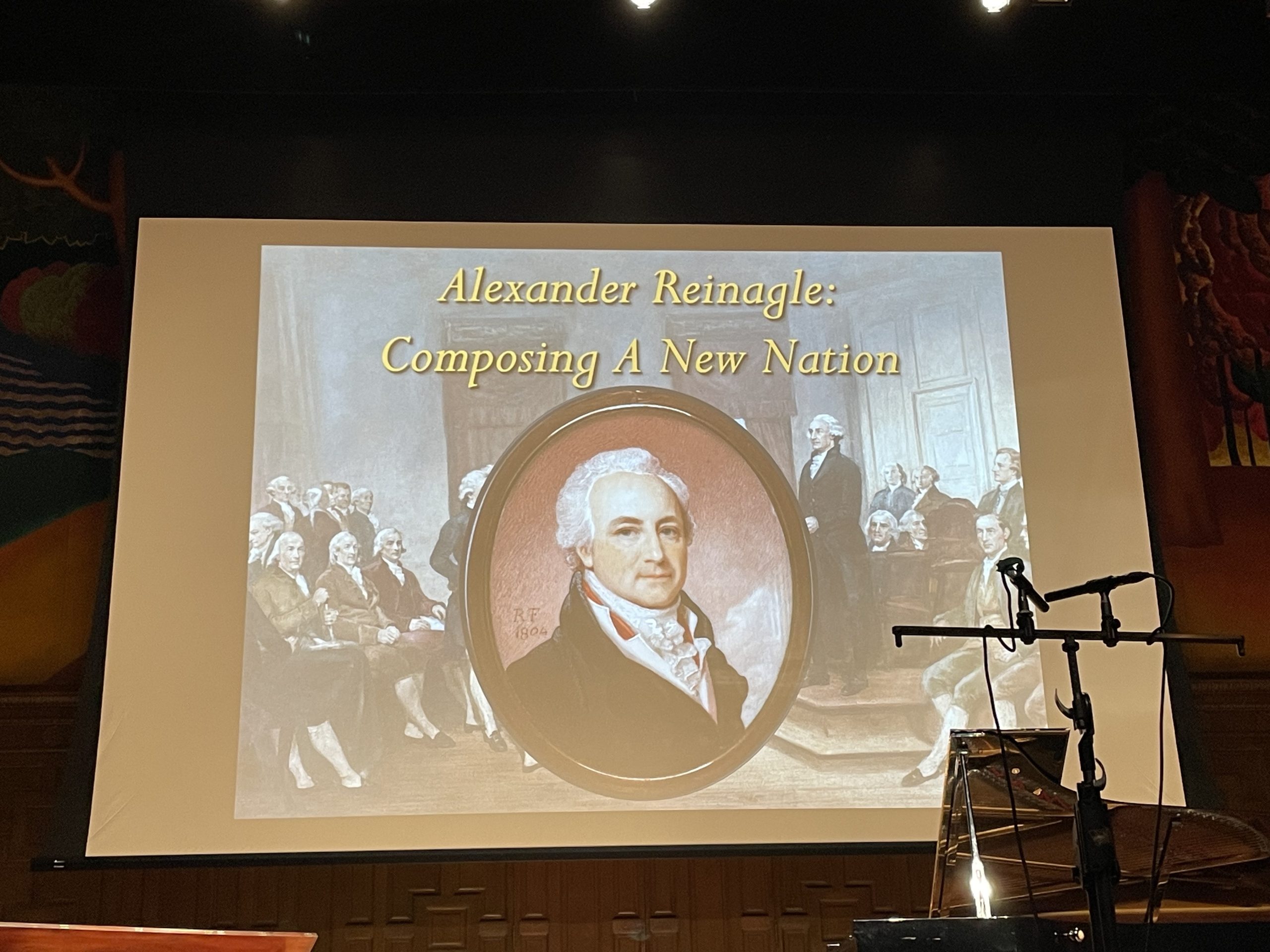
Other Minds holds certain truths to be self-evident—what better way to celebrate the American semiquincentennial than with two summer concerts featuring Maverick American Composers from distinct eras of musical history? For our second concert in the series, on Monday, July 20, 2026 at 7:30 pm at Littlefield Concert Hall, Mills College at Northeastern University, Oakland, we were ecstatic to feature a Maverick less well known: the federalist era’s Alexander Reinagle (c. 1750–1809), friend of C. P. E. Bach, and George Washington’s favorite composer.
Alexander Reinagle was born in Edinburgh and emigrated to America in 1786. He soon established himself as Philadelphia’s most renowned musician, and after George Washington heard him at the Constitutional Convention in 1787, Washington engaged him to give piano lessons to Martha’s granddaughter, Nelly Custis. Nelly was ten when she began her instruction in 1789, and within a few years, Reinagle had completed several large Sonatas for the piano which are today known as the Philadelphia Sonatas. Although they were not published till long after his death, he performed them frequently at public concerts, and today they are regarded as the most significant keyboard music composed in Early America.
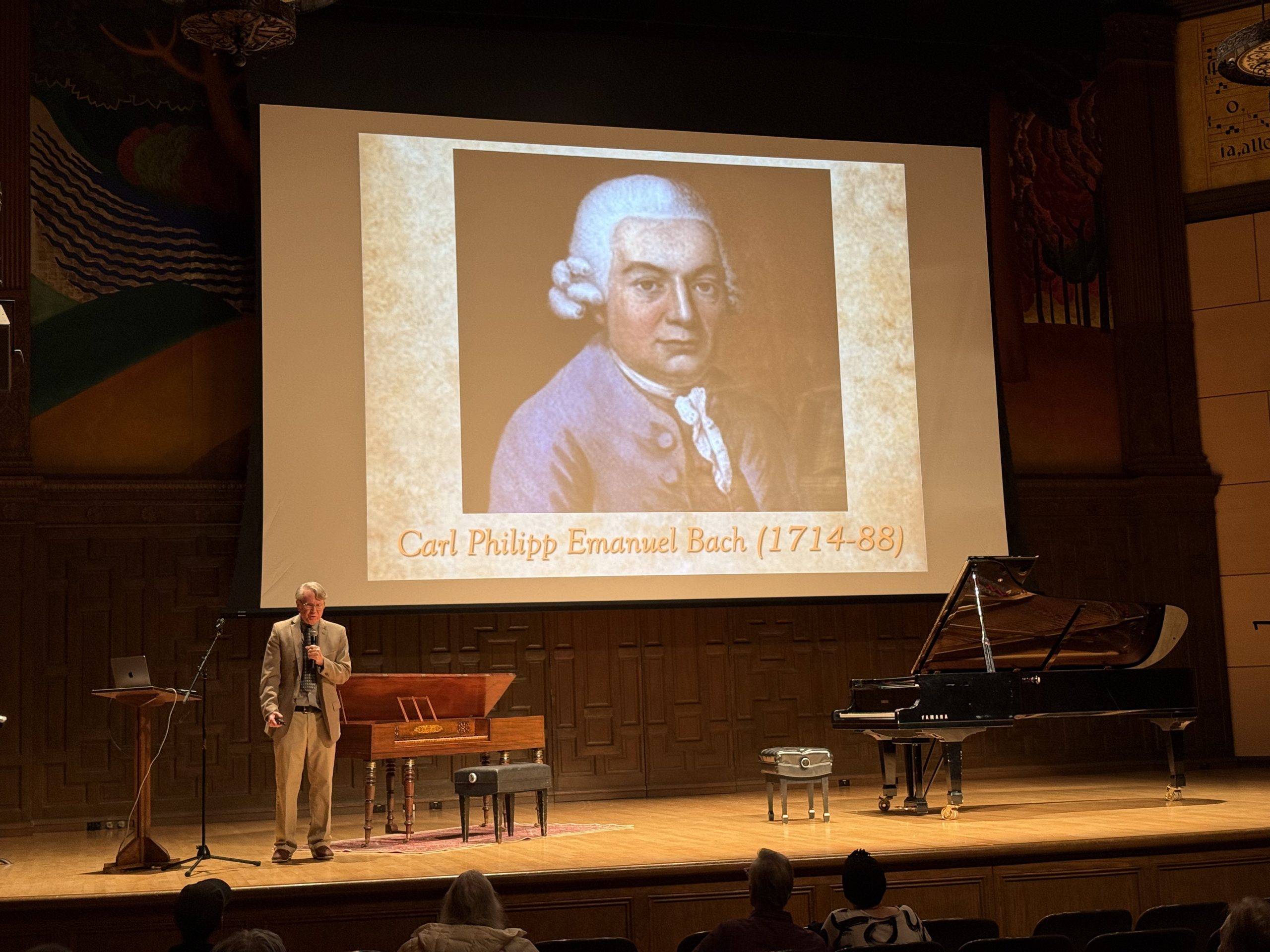
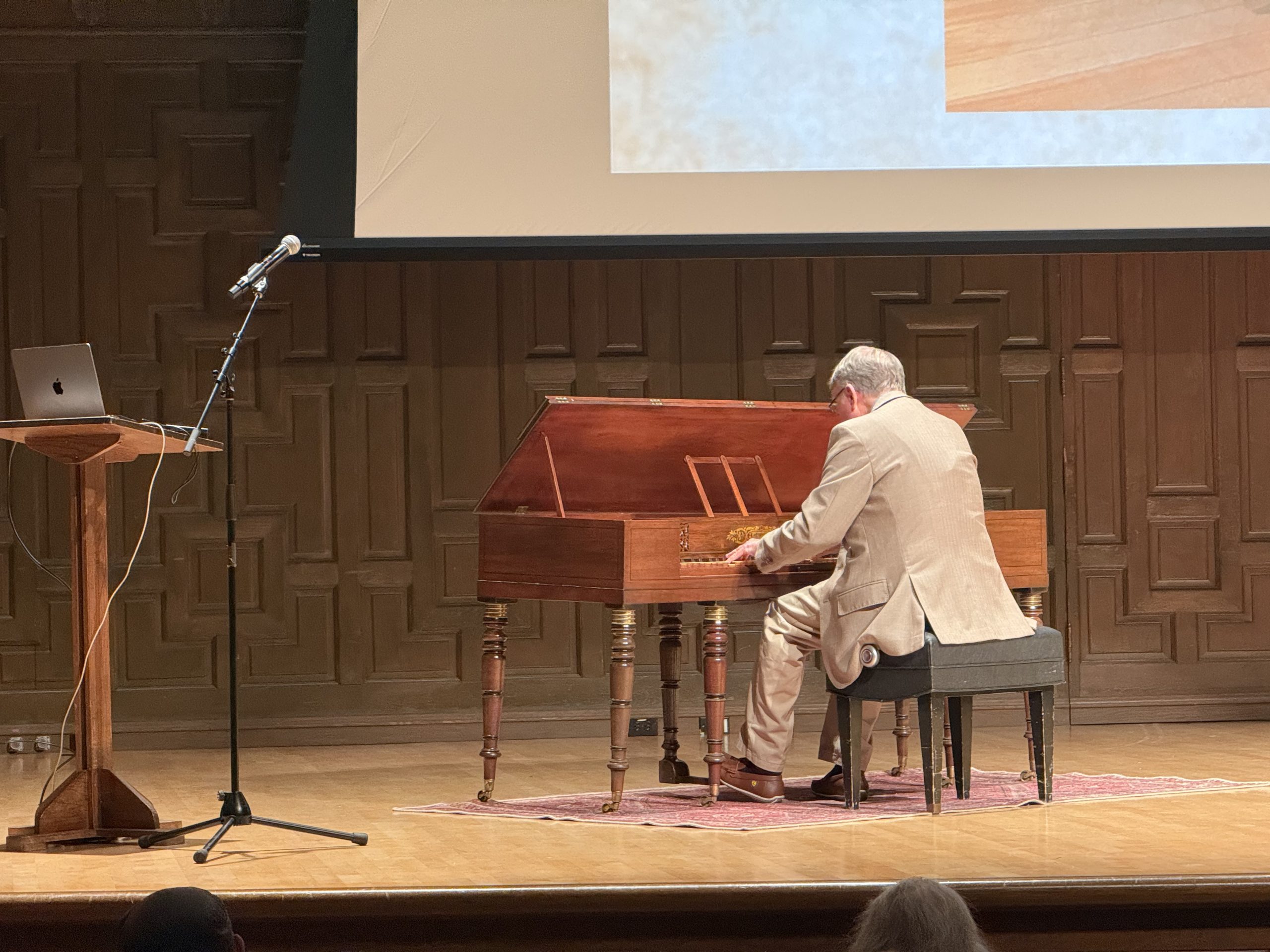
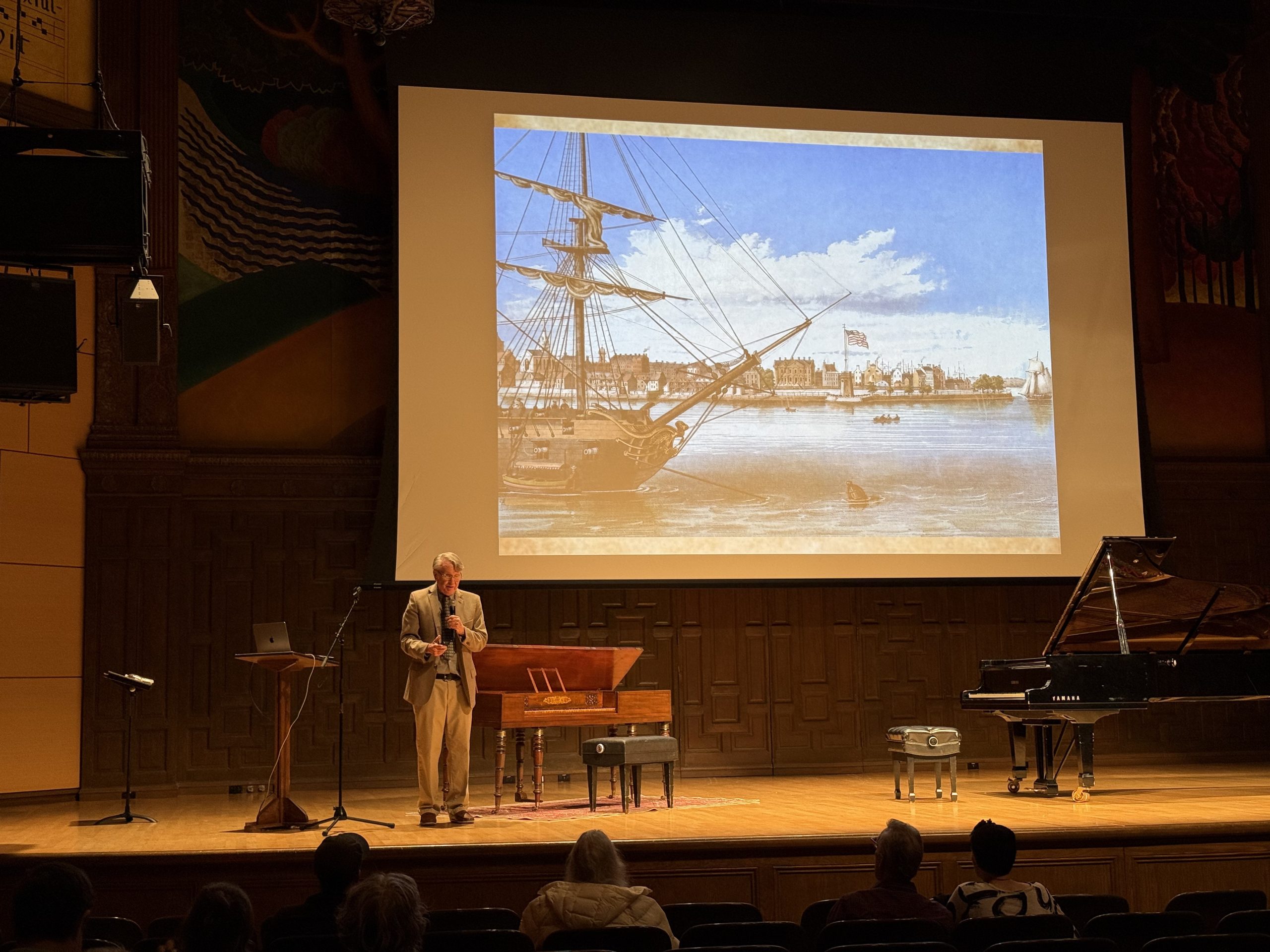
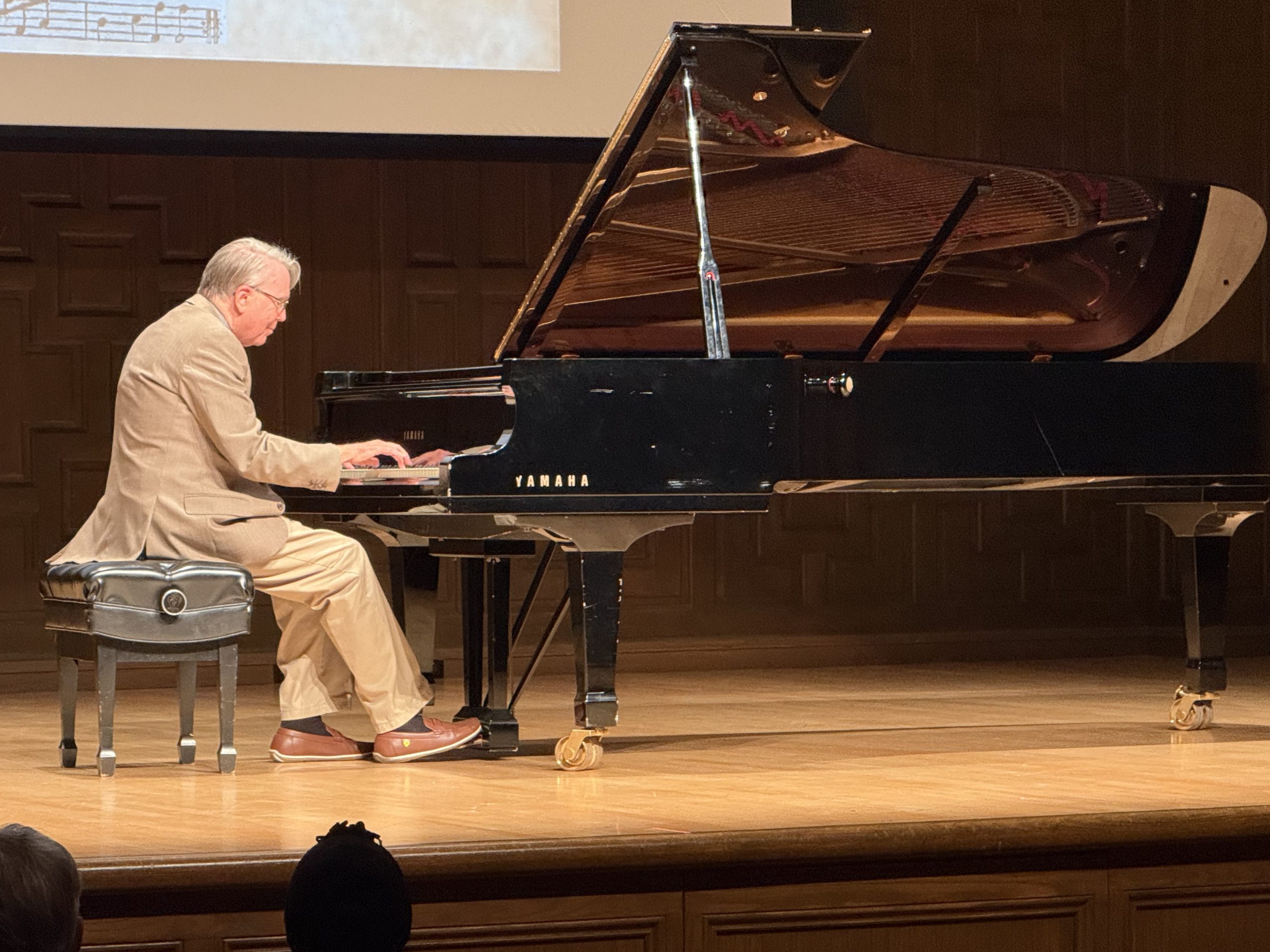
Presenting Reinagle’s work on both piano, as well as the more historically appropriate fortepiano, was Stephen Siek, whose recording of the Philadelphia Sonatas remains the gold standard. Siek also presented commentary on the work as well as a lecture with projections illustrating the life and work of the composer.
This concert was sponsored by a generous donation from Gretchen Brosius.
This concert was part of our PastForward piano series, presented in cooperation with the Center for Contemporary Music, Northeastern University and Mills Performing Arts, and is supported in part by a grant from the Ross McKee Foundation.
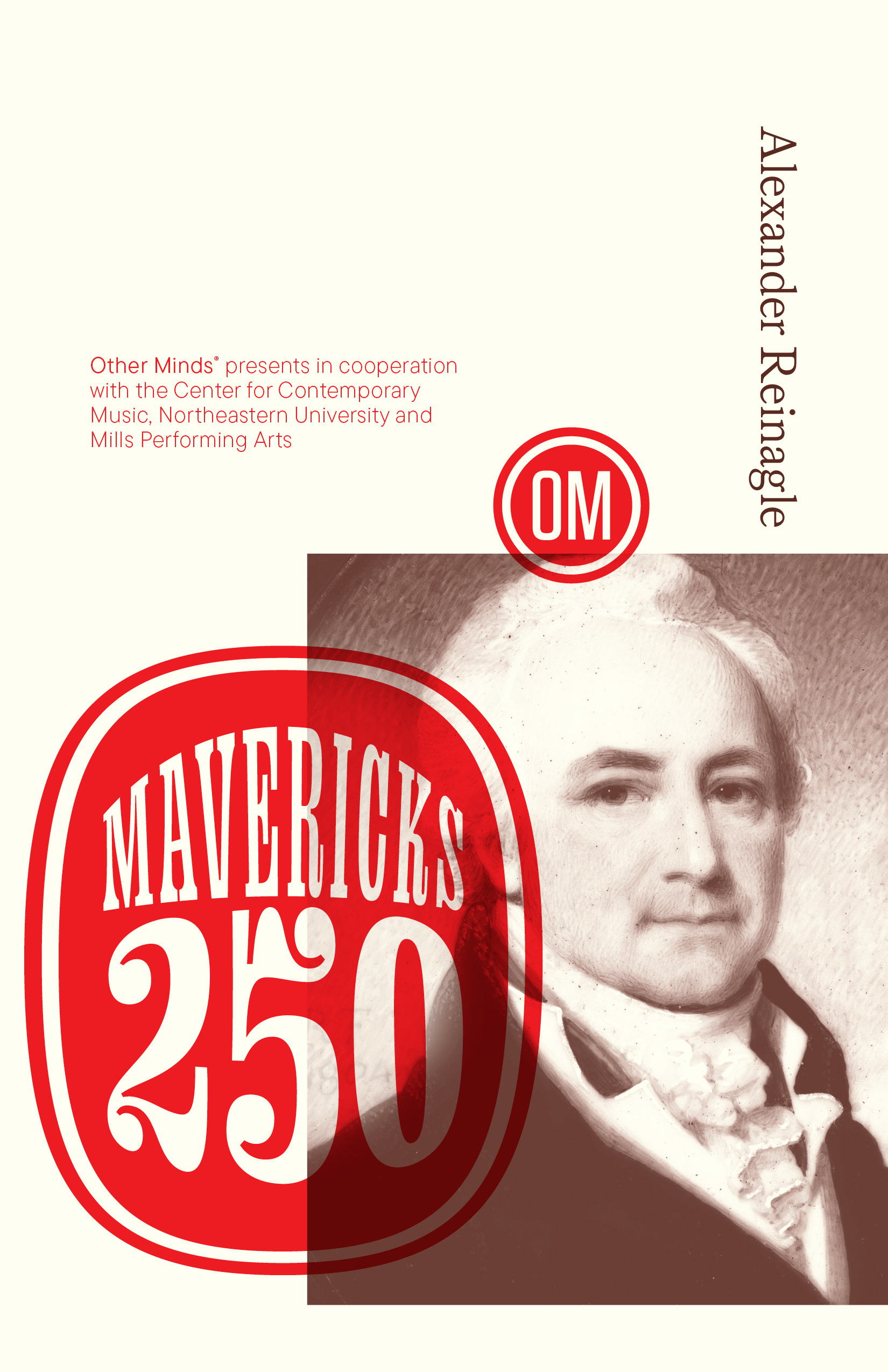
Click the image to download the full concert program.
Program
Alexander Reinagle
Variations on “Lee Rigg” (c. 1787)
Sonata No. 3 in C Major (c. 1790)
Allegro con brio
Adagio
Allegro
Intermission
Variations on “Steer Her Up and Had Her Gawn” (c. 1787)
Sonata No. 2 in E Major (c. 1790)
Allegro
Adagio
Allegro
Photos
Photo Credits: Charles Amirkhanian and Joseph Bohigian

About Stephen Siek
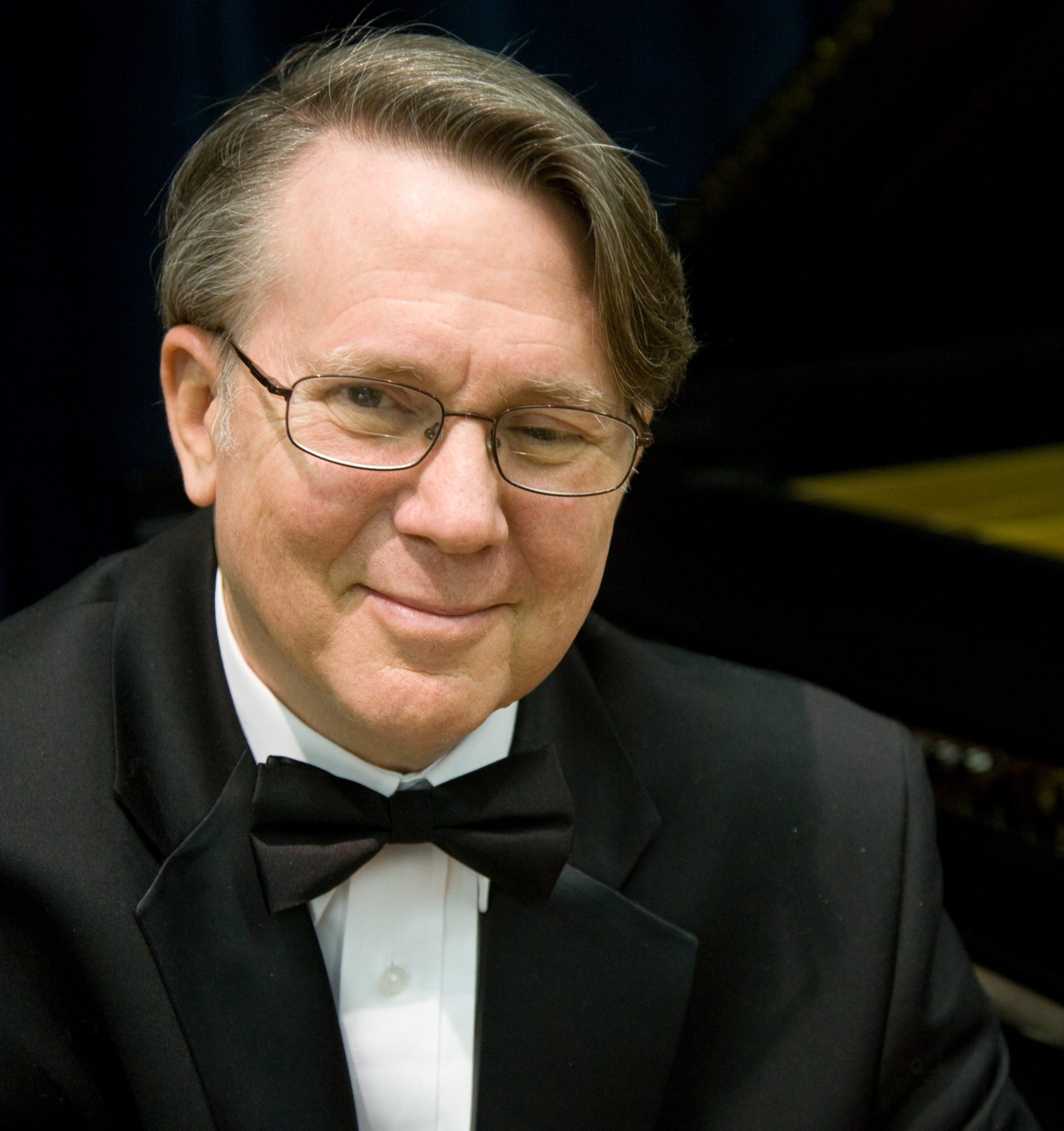
Stephen Siek, pianist and musicologist, is the author of England’s Piano Sage: The Life and Teachings of Tobias Matthay (Scarecrow Press, 2012; , 2nd ed., H. L. Marston, 2020) and of A Dictionary for the Modern Pianist (Rowman & Littlefield, 2016; Bloomsbury, 2025). His interest in Alexander Reinagle (c. 1750–1809) began in the 1980s when he first began teaching courses in Early American Music, and his doctoral dissertation (U. of Cincinnati, 1991) focused extensively on Reinagle and his music in the first concentrated study of Benjamin Carr’s Musical Journal (1800–1804)—the earliest collection of exclusively secular music in the new Republic. In the summer 1993 issue of American Music, he presented original research concerning Reinagle, Carr, and other musical figures active in post-Revolutionary Philadelphia, and his recording of Reinagle’s Philadelphia Sonatas (1998) on the Titanic label soon met with high acclaim.
Siek has concertized extensively throughout the U. S., Canada, and the U. K., and has presented numerous lecture/recitals for organizations such as the Historical Keyboard Society of America, the American Liszt Society, and the Society for American Music. His scholarly papers have been presented at institutions ranging from Yale to the University of Nottingham, and in 2015 he performed at the Royal Conservatoire of Scotland in Glasgow for the Tenth Biennial International Conference on Music in Nineteenth-Century Britain.
His numerous articles have appeared in such journals as American Music Teacher, Piano Quarterly, Piano Journal of the European Piano Teachers’ Association, and International Piano. He is also a contributor to the Revised New Grove Dictionary of Music and Musicians, as well as the new edition of the Grove Dictionary of American Music. His other scholarly writings have included pieces for the American Musical Instrument Society Journal, and Symposium (the journal of the College Music Society).
A recognized authority on historic pianism, Siek moderated a panel of experts at the Eastman School of Music in 2015, and he has annotated over two dozen CDs for leading labels which commemorate some of the greatest artists of the past. For APR, his annotations include memorials to Harriet Cohen, Myra Hess, Irene Scharrer, Bartlett & Robertson, and Tobias Matthay, and he has annotated the entire Decca catalogue of Dame Moura Lympany, as well the highly acclaimed complete Decca LPs of Ruth Slenczysnka. He has also annotated the complete Deutsche Grammophon catalogue of Andor Foldes, and for the Hyperion label, Garrick Ohlsson’s highly praised disc of the solo works of Charles Tomlinson Griffes.
Siek is a past president of the American Matthay Association, and holds Bachelor of Music and Master of Music degrees in piano from the University of Maryland. He also holds a Ph.D. in musicology from the College-Conservatory of Music at the University of Cincinnati, and for many years he served as a professor of music at Wittenberg University in Ohio. He now lives in Tempe, Arizona, where he currently directs the Academy for Continued Learning for the Emeritus College at Arizona State University, and serves as a Faculty Associate in the School of Music. In 2019, at a ceremony in London, he was awarded the status of Honorary Associate by the Royal Academy of Music.
About Alexander Reinagle
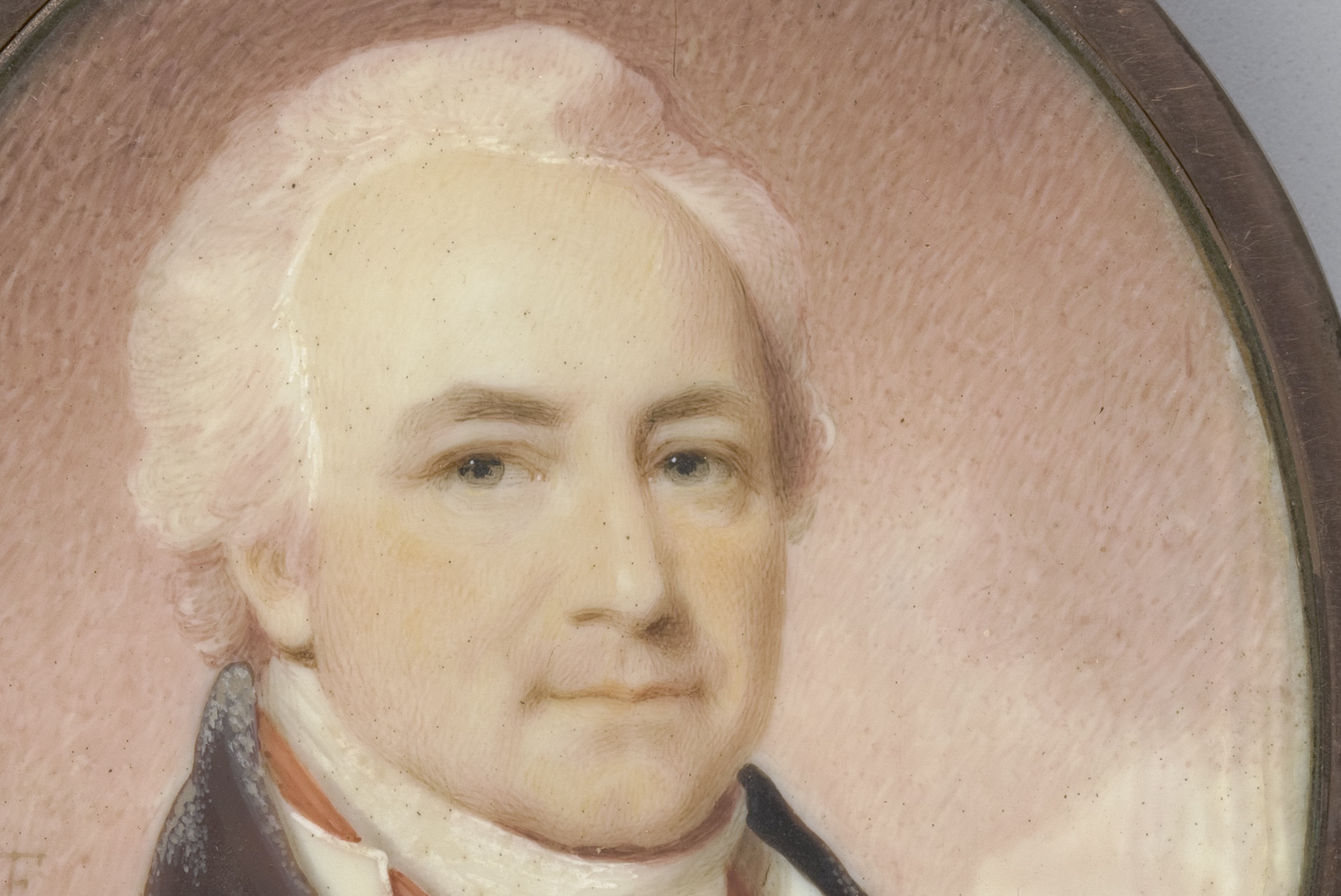
Edinburgh-born Alexander Reinagle (c. 1750–1809) was raised by a family of musicians praised by Handel for their weekly concerts with the Edinburgh Musical Society. Alexander was trained as a keyboardist—he was also a second-best violin player—and took to the family profession. Our first knowledge of a public performance is in April 1770 in Edinburgh. It was an itinerant life; records surprisingly indicate he and his siblings were shipped to Virginia on occasion to work on plantations. Still, his early musical career took him to Glasgow, London, and back to Edinburgh where he worked as a musician, teacher, concert manager, and church organist until his 30s when, with his sick brother Hugh, he traveled to Lisbon. The city’s milder climate allowed Hugh a few more years.
Earlier trips to Europe had put Alexander in touch with C.P.E. Bach; Bach’s letters suggest that Lisbon afforded Reinagle the opportunity to publish Bach’s music and sell pianos in addition to performing concerts. By 1786 Reinagle had emigrated to America, and on July 20, 1786, in New York “At the Assembly-Room, Broad-Way…will be performed A Grand Concert of Vocal and Instrumental MUSIC; under the Direction of Mr. Reinagle.” It was his first concert in the United States: mostly Haydn, but with songs and sonatas by Reinagle and others. As the musicologist Anne Krauss notes—in her groundbreaking article on Reinagle where much of the information for this bio is taken—”Reinagle’s first performance in America was notable because his decision to perform at the piano rather than the harpsichord introduced the public to his keyboard prowess on the most modern instrument available.”
By all accounts, the life of an American musician has not changed in 250 years; for the rest of his life, in Philadelphia and other parts of the Eastern Seaboard, Reinagle gave concerts himself, promoted and produced concerts for others, taught lessons, printed songbooks, sold pianos, and composed music. Amongst these accomplishments—many of which you will hear about during Stephen Siek’s program this evening—two events stand out: 1) Reinagle was a principle force in the erection of Philadelphia’s New Theatre on Chestnut Street—one of the earliest, if not the first, European-style theaters built in America for paying audiences and, 2) Reinagle played for a Philadelphia audience that included George Washington during the 1787 Constitutional Convention. Washington later hired Reinagle to teach his granddaughter Nelly Custis. Throughout, Reinagle composed the Philadelphia Sonatas as well as a number of adaptations and variations of the Scots tunes he heard during his childhood. Alexander Reinagle died in 1809 and is buried in Baltimore.